GRAPHIC on the story of Libel Reform in Northern Ireland (in full here)
[This was originally published on eamonnmallie.com and Off the Record] (updated below) Introducing the Defamation Act 2013
On January 1 2014 the Defamation Act 2013 came into effect in England and Wales.
The new law strengthens freedom of expression and gives a warm hand to journalists, writers, academics and scientists. The new law increases the freedom of readers to receive information. The new law strengthens the free speech position of every internet, social media and Twitter user. Olivia O’Kane explains the changes here.
@wallaceme@JackofKent not at all, but perhaps this is tomorrow's conversation. McAlpine behaved, in my view, disgracefully.
— Louise Mensch (@LouiseMensch) January 23, 2014
However since the coming into force of the DefamationAct 2013 in England and Wales on January 1 2014, tweets will be required to meet the higher thresholds laid out in the new legislation. How judges interpret the new legislation means that the law will continue to develop. But in the mean time, the McAlpine precedent rests. Media Law NI covered the McAlpine-Bercow case extensively here.
A communication made on Twitter is potentially libellous in England and Wales if it damages someone's reputation "in the estimation of right thinking members of society". It can do this by exposing them to "hatred, ridicule or contempt". This applies also to re-tweets.
In an earlier post on Defero Law here, 'Social Media and the Law in England and Wales, Scotland, Northern Ireland and the Republic of Ireland', Brian Spencer (@brianjohnspencer) wrote:
"The [social media law] situation hasn't been as fluid in Scotland as it has in England and Wales and elsewhere. The position can be summed up pretty quickly. Where on December 19 2012 the DPP for England and Wales published interim social media guidelines, the lead prosecutor north of the border, the Lord Advocate of the Crown Office and Procurator Fiscal Service (COFPS)said that they would not follow the lead of DPP, Keir Starmer QC.
The Scottish prosecutor’s position was that they would not hand down social media prosecution guidelines; but would rather continue to take a ‘robust approach’ against offensive material posted online. No definition of the term ‘robust approach’ was given."
In September 2013 Simon Hamilton asked (here) that the Northern Ireland Law Commission cast a fresh pair of eyes over the decision to veto the Defamation Act 2013. They responded here in December 2013 to look into the issue and recommended a public consultation on the matter.
By means of the Northern Ireland (Miscellaneous Provisions) Bill, Westminster peers Lords Lexden, Bew and Black have intervened on the matter via London, ontop of the two prongs operating from Belfast.
The London Bill deals with a number of issues relating to Northern Ireland. But it contains an important amendment that would extend the Defamation Act 2013 to Northern Ireland. In response to this Bill, the editor of the Belfast Telegraph Mike Gilson wrote if it in an article here, 'Libel law reform will protect us all'. He said:
The Financial Times legal blogger David Allen Green (@DavidAllenGreen) wrote about social media regulation in The New Statesman. My previous post on Allen Green's move from the New Statesman to the FT can be read here. He said here on social media self-regulation:
"Social media provides the means by which clusters of like-minded individuals can easily swap ideas and scrutinise data on public matters. In this way, social media users can hold politicians and media outlets to account in a manner not possible -- or conceivable -- until a few years ago. Instead of a politician saying something forgotten the day after, or a reporter's bylined piece being in next day's fish-and-chip paper, those involved in social media can pore over details and make connections weeks and months later. Transgressions can be linked to and accumulated. A speech or a byline can now come back and haunt you long after you have "moved on".
As long as there are those willing to promote such accountability then politicians and media professionals can now be subjected to on-going and sometimes intense examination. The effect of this may be to make those with political and media power more responsible; it will certainly mean that it is more straight-forward and more likely that individuals can be called out for any wrong-doing. On this basis it is not those in power who will be regulating social media, but social media regulating those in power.
Once social media is understood as an advanced form of active citizenship then it can become part of the solution to the problem of abuses of political and media power; not part of the problem to be addressed by regulation. Regardless of the self-serving caricatures promoted by some in the media, the record of bloggers and tweeters compares rather well to tabloid excesses. In the medium- to longer- term, it is clear that those in mainstream media who work with social media will tend to produce better output.
Adam Wagner was asked here by Lord Leveson: "The Inquiry would also welcome your views on the extent to which the content of websites, and the manner in which you operate, can be regulated by a domestic system of regulation?" He responded here:
I do not think blogs can or should be regulated by a domestic system of regulation, for the following reasons:
a. Practically unworkable: Practically it would be impossible to regulate all blogging. Hundreds of thousands of blogs are set up each day, let alone posts published, and the term is so elastic (see above) that the task would be simply too large and amorphous for any regulator to manage. Even if only popular blogs were targeted, say those over a certain number of hits, what is to stop an individual blogger simply setting up a new blog in order to avoid regulation? I expect that such a system would be simply unworkable.
b. Current system works: The current system of criminal and civil law already provides a reasonable level of regulation. Bloggers - whether their websites are read by 1 or lm people - are subject to financial penalties for libel or quasi-criminal sanctions if they commit a contempt of court. See for example the case of Elizabeth Watson, referred to be below, who was sentenced to 9 months imprisonment (later suspended) for breaching a court order through information published on her personal website. That being said, I also note a 1 February 2012 report in The Independent that Mr Justice Peart has said in relation to an Irish case involving the www.rate-yoursolicitor.com website that "The civil remedies currently available have recently been demonstrated to be an inadequate means of prevention and redress".
Clive Anderson recently chaired a discussion on Radio 4 in May 2013 that asked a simple question: how free is our speech in Britain today? The discussion also took the time to considered specifically how speech on social media should be controlled or otherwise.
Billed as 'the programme that gets behind the legal issues of the day,' it certainly did that. You can listen to the episode in full here.
Clive Anderson kicked things off with a nice overview of the legal history as it exists in law in Britain to date and how this contrasts with our love of freedom:
"Twitter International was directed by a High Court judge in Dublin today to remove from the internet “grossly defamatory and offensive sexually related pictures and tweets” about an Irish schoolteacher.
Mr Justice Michael White ordered Twitter International, which has its registered address at Pearse Street, Dublin, to immediately take down the offensive material contained in a profile associated with the woman.
Judge White said the court would make no comment on the liability of Twitter which had previously indicated it simply facilitates members of the public to engage in discourse over the internet.
Twitter had denied liability for posting of the pictures and tweets. The judge told barrister Shannon Michael Haynes, counsel for the woman, that while the proceedings had been heard in public he would direct that the profile complained of should not be identified by the media."
Key changes with E&W Defamation Act http://t.co/VuxGQng8H0 1. the fact that companies suing in libel must show financial loss;
— Olivia O'Kane (@OliviaOKane1) August 1, 2013
The Defamation Act 2013 will come into effect in England and Wales as of January 1 2014, as we explained earlier here. Ahead of the new year Olivia O'Kane, Northern Ireland media lawyer at Carson McDowell and media law blogger, explains the 9 key changes enacted under the Defamation Act 2013. Click below to see the rest
Ahead of the new year and thus the coming into force of the Defamation Act, it is of value to cast our eye back over the lessons we learnt from the Bercow v McAlpine case. As Feargus O’Sullivan said in The Financial Timeshere, although Ms Bercow’s tweet would still fall foul of the new law, the situation may nonetheless change somewhat when the Defamation Act 2013 comes into force.
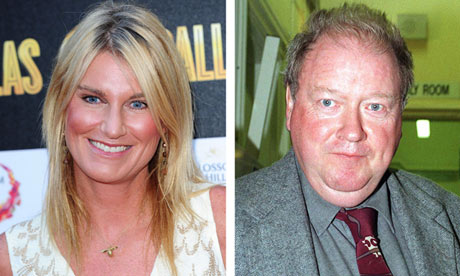
Over to the May 13 High Court ruling. Presiding over the case between Bercow and McAlpine was Mr Justice Tugendhat who found that Sally Bercow had libelled Lord McAlpine by publishing on Twitter defamatory, albeit "nuanced", communications. Full judgement can be read here. Bad for law firm Carter-Ruck who had been instructed by Bercow. In his summation, the UK's senior libel judge Judge Tugendhat said:
“I find that the Tweet meant, in its natural and ordinary defamatory meaning, that the Claimant was a paedophile who was guilty of sexually abusing boys living in care.
If I were wrong about that, I would find that the Tweet bore an innuendo meaning to the same effect.”
In a recent episode of The Big Questions (broadcast April 28 2013), Nicky Campbell tackled the issue of social media misuse and abuse.
The context? Two days prior on April 26 2013, Dean Liddle and Neil Harkins were both handed down suspended sentences (see here) for breaching a court injunction that banned any revelation of the adult identities of Jon Thompson and Terry Venebles – the killers of James Bulger.
Last Febrarury the two men had both posted photos on Twitter and Facebook that claimed to be of the two child killers. As the judge rightly said, the photos could have been seen by thousands of social media users. This was an act directly in contempt of court.
In that context we ask: Is social media out of control? Vicky Beeching, research fellow in internet ethics at Durham University kickeded things off and gave a twofold answer. She said:
"Firstly, we need to remember that social media is in its infancy. It’s so young. Twitter has turned 7, YouTube has turned 8. We’re literally taking baby steps. So we can’t panic and say it’s out of control.
Secondly, the danger is when we look at the technology and we say that technology is to blame, we need to remember that all technology, whether it’s the invention of the wheel, the printing press or the internet: they’re neutral tools, they’re in our hands and if they’re out of control it’s simply a sign that we’re out of control."
Nicky Campbell rightly added that social media is in effect a reflection on us. But by and large most people are decent and they are fair. Nicky Campbell then asked: Is there something about social media that allows people to be particularly vile? Kate Smurthwaite, feminist writer said in response:
"Yes, absolutely. Several decades ago Germaine Greer said, ‘women have little idea how much men hate them.’ Well thank you to the internet we now know. I’m less than a week away from my latest death threat. That’s my life. That’s normal for me (reminds me of the abuse Mary Beard got when she appeared on Question Time).
In the same week that will host the final game of the British and Irish Lions tour of Australia I have produced a comprehensive overview of the laws that govern Facebook and Twitter across the British Isles. This includes separate and specific analysis of the four jurisdictions of England and Wales, Scotland, Northern Ireland and the Republic of Ireland.
England and Wales
On September 20 2012Keir Starmer QC, DPP for England and Wales announced that new social media prosecution guidelines would be discussed after a series of controversial arrests and prosecutions. For some time the public had been critical of the heavy-handed approach of the police and judiciary against social media users.
Judges and other law officials had also voiced concern about the uncertainty of the law. And I think everyone had a genuine desire to uphold traditional notions of free speech. The whole problem was typified by the #TwitterJokeTrial which involving Paul Chambers who tweeted that he would blow up an airport if his flight was cancelled. On December 19 2012 the interim social media prosecution guidelines were then published. On the same day a public consultation was launched. The consultation process closed March 13 2013. On June 20 2013, almost 9 months to the day after Keir Starmer QC announceed that the Crown Prosecution Service and other law makers would discuss social media laws, the full and final social media prosecution guidelines were published.
Crude but a powerful metaphor that captures just how destructive social media can be:
"With twitter, once its out there & you try to remove tweets, it's like trying to taking piss out of a swimming pool."
There's just no hiding. The social analytics company Topsy now offers the entire history of public tweets on Twitter. Even deleting a tweet won't cover your back. If someone retweets the offending or questioned tweet it has been cast in concrete. As an Irish politician found out. Find out all about that here.
John Cooper QC and Paul Chambers of #TwitterJokeTrial
Below are the blunt words of Keir Starmer QC, the former Director of Public Prosecutions (DPP). And why the bluntness? The former head of public prosecutions in England and Wales was obviously angered by the criticism delivered by experienced criminal silk, John Cooper QC (@John_Cooper_QC) who cast doubt on the newly published (December 19 2012) interim social media prosecution guidelines. Here's what he said:
“Well I don’t think John Cooper with all respect has seen anything like the number of cases I have. I don’t think he has thought about the sophistication of the issues. There are many cases…I mean he can point to one case [the Twitter Joke Trial]…yeah he makes a cheap point about one case. I've got to deal with the many thousands of cases that come in; I've got to deal with all the chief constables. So, yes, nice cheap point, but actually let’s get back to reality.”
Here are the basic steps any person concerned should take:
"Where an individual is being abused: “Twitter can only accept reports from the individual directly involved in the abusive situation, or their legal representation. We encourage people to file reports of abuse so we that we can investigate the situation and take action if necessary,” quoted by Twitter.
Report Abusive User by registering information here.
Violation of copywright and abusive content
To report both abusive content and unauthorised use of copyrighted and trademarked material, click here to access information on how to reporting accounts.
Libel/defamation
In the first instance contact the police where defamation/libel has occurred. At the same time you should report the account using the ‘Report Abusive User’ link provided above, and also request its removal via the links on the ‘How to report violations page’.
If you go down the copyrighted materials route, here is the information you require. You should say: “I am reporting on behalf of the rights holder, as their authorised representative.
Name of Rights Holder: Chris Shea. Your relationship to the rights holder: Colleague… if they ask for this information. We haven’t raised a trademark complaint on Twitter before and therefore don’t know what other questions are asked once you get into the form. Hopefully the information in this table should cover it.
Further reading and information
Further information from Twitter support page on dealing with online abuse here.
The image above is of a rogue tweet made by the former head chef of the Plough Pub and eatery. Having lost his job the man decided to reveal damaging information. This shows how social media is not only a weapon of mass reputational destruction from outside, but also from within.
Liz Bingham whose UVF father was shot dead by the IRA in the 1980s could be prosecuted after it was alleged she asked if there were any ‘taigs’ on board the Police Scotland helicopter or The Clutha Bar into which it crashed. Read more here.
This follows the arrest of a Scottish teenager who made sectarian remarks in relation to the same tragic event. Read more here.
The new libel law was vetoed by Stormont. Mike Nesbitt has proposed a Bill, its consultation is complete and is now been put before the Law Commission NI by the Finance Minister Simin Hamilton. In the Financial Times, Feargus O’Sullivan said:
"Although Ms Bercow’s tweet would still fall foul of current laws, the situation may nonetheless change somewhat when the Defamation Act 2013 comes into force. It may become harder for the injured party of a perceived social network libel to seek legal redress. Courts will require proof of “serious harm” to reputation before a case can proceed. The act provides a statutory defence of “publication on matter of public interest”. It also makes defences of “truth and honest opinion” statutory. The reform is probably for the best. No one really wants social networks where users feel at risk of legal action for expressing a negative but honest personal opinion, and it is helpful to have the law simply expressed in a statute that is easily accessible.
Twitter and other social media users have been warned that by commenting on court cases online they could be inadvertently be breaking the law. Dominc Grieve, the Government's chief legal adviser has issued previously unpublished advisory notes to help prevent social media users committing a contempt of court.
Read more here. Mr Justice Tugendhat spoke and made law here.
Teenager arrested for sectarian and racist comments online about Glasgow helicopter crash at Clutha pub: http://t.co/5Mi6cFFw1Q
— IBTimes UK (@IBTimesUK) December 2, 2013

.jpg)