Showing posts with label Mike Harris. Show all posts

Tuesday, 15 April 2014

Event - Launch of the Libel Reform Campaign Northern Ireland

The Libel Reform Campaign present a petition with 60,000 signatures to Downing Street in 2012
The immensely successful Libel Reform Campaign is coming to Belfast and Northern Ireland (sign up here):
"On Wednesday 7 May at 10am the Libel Reform Campaign will be bringing together writers, journalists, scientists, academics, human rights advocates and civil society to form a coalition to bring reform of the law of libel to Northern Ireland. 
With the launch of the Northern Ireland Law Commission consultation on libel reform expected in the coming months, a strong coalition will be needed that makes the case for reform of these archaic laws. You can read the campaign's criticisms of the law and the process that led to the new Defamation Act not being applied to Northern Ireland here and here
We would very much appreciate your participation in this coalition and your attendance at this event to bring together the coalition. I will be joined by Jo Glanville from English PEN, Sile Lane from Sense About Science and other Libel Reform campaigners. 
The event will be hosted in The Lab at the Belfast MAC (10 Exchange Street West, Belfast BT1 2NJ) from 10am - 12.30pm on 7 May. Plenty of coffee and pastries will be provided."
Sign up and register your attendance here.

Friday, 28 March 2014

Mike Harris - "Why is free speech not good enough for Northern Ireland?"


Writing in the Huffington Post here, Mike Harris (@mjrharris) has called the DUP's decision to veto libel reform an outrageous decision. He began by explaining the campaign for libel reform in England and Wales:
"It took endless humiliation before parliament got the message and decided to reform the law of libel: the UN Human Rights Council said our libel law chilled free speech across the entire globe, American academics faced our courts for writing about the funding of Al Qaeda, Barack Obama signed into law an act to protect Americans from our libel law and decent scientists such as Simon Singh Ben Goldacre and NHS cardiologist Pete Wilsmhurst faced ruin thanks to the law.

Friday, 7 March 2014

Mike Harris - House of Lords sends a clear message to Stormont: reform of the libel law is overdue


Last Tuesday, Lord Lexden alongside Lord Bew and Lord Black tabled an amendment to the Northern Ireland (Miscellaneous Provisions) Bill to extend the Defamation Act 2013 to Northern Ireland. Seeing the impact on freedom of expression and the opaque manner in which this issue has been handled, respected parliamentarians spoke up for the amendment. The government refused to accept the motion and it was not put to the vote, but the debate itself had the desired impact. The amendment was a direct challenge to the DUP who feel that they alone can decide on libel reform for Northern Ireland.

It remains the case that very few know why the Defamation Bill does not apply to Northern Ireland, an outrageous decision that has created a gaping loophole in the government's attempts to reform the UK's libel laws. As I noted in the Huffington Post, the humiliating rebuke by the United Nations Human Rights Council to the previous state of the libel law in England, Wales and Northern Ireland led to:
“the three major political parties to make a commitment to libel reform in their general election manifestos in 2010. They didn't qualify this bold commitment with "except in Northern Ireland". Why would they? The law in Northern Ireland has always been substantially the same as the law in England and Wales, that is until the government reformed it. At no point in the parliamentary debate did the government signal the Defamation Bill would not apply to the citizens of Northern Ireland.”

Wednesday, 29 January 2014

"Overwhelming support" for libel reform

The public consultation into the reform of libel laws in Northern Ireland has received "overwhelming support" says Mike Nesbitt. Over 90% of responses to his public consultation backed changing the law. The public's response was stronger than the UK-wide consultation by the Ministry of Justice on the Defamation Act 2013. On the need for libel reform Mike Nesbitt stressed the special need Northern Ireland has for a robust, curious and unfettered press:
"This is about protecting freedom of speech in Northern Ireland. This is particularly important to us, because our current system of government means we do not have a second chamber, like the Lords in London, who scrutinise and revise legislation coming out of the Commons. Nor do we have an official opposition, a role performed to a large extent by the media.

Thursday, 16 January 2014

Mike Harris speaks of the urgency to reform Northern Ireland libel laws


The Head of Advocacy at Index on Censorship Mike Harris (@mjrharris) wrote an overview of the Defamation Act 2013 which came into effect in England and Wales on January 1 2014 (government press release here) on the Inforrm blog here. The new speech and communication law considerably strengthens the position of the publisher, journalist and the internet user. Of interest: tweets sent after January 1 will be required to meet the higher thresholds set out in the Defamation Act 2013.

Mike Harris said of the situation in Northern Ireland:
"Of particular urgency is the situation in Northern Ireland where libel sceptics have won the day with the Northern Ireland Executive blocking the application of the new Defamation Act to the province. The Department for Finance and Personnel refuses to comment on the basis of “confidentiality” as to why it had not been able to secure the “necessary consents” for the Defamation Bill within the required timescale. The Libel Reform Campaign hopes to help the Northern Ireland Law Commission with their forthcoming consultation on the libel law and will be campaigning to ensure the Executive revisits this issue to create a law that can be a progressive blueprint for other common law jurisdictions."

Monday, 6 January 2014

Update - Defamation Act 2013

In the UK Human Rights Blog here, Sarina Kidd updates us on the Defamation Act 2013 and quotes Mike Harris :
"The Defamation Act 2013 came into force on the 1st January 2014. The Act aims to reduce the ‘chilling effect’ that previous libel laws had on freedom of expression and legitimate debate. It is also hoped that it will prevent journalists, scientists and academics from being subjected to unfair legal threats. It is now the case that claimants, before suing, will have to demonstrate that they have suffered ‘serious harm’. Mike Harris of The Libel Reform Campaign stated that: 
‘we hope the judiciary will take note, and that in the future open debate on matters in the public interest will not be chilled by litigious oligarchs or corporations’."
The government's press release on the coming into force of the new law here. Original UKHRB in full here. Olivia O'Kane outlines the 9 keys changes enacted under the new law here. Introductory blog post here. The blog post which announced the enaction of the new speech law here.

Tuesday, 24 December 2013

Northern Ireland Law Commission recommends libel law review

In the period between May and June 2012 Sammy Wilson, then Finance Minister, vetoed the Defamation Act 2013 without consulting any of the other parties, deciding not to pass a 'legislative consent motion'. He said that threats to free speech were "just a load of nonsense."

In May 2013 Mike Nesbitt introduced fresh libel legislation (our post here).

In September 2013 the newly installed Finance Minister Simon Hamilton asked the Northern Ireland Law Commission to cast "a fresh pair of eyes" over the Defamation Act 2013 (our post here)

In November 2013 the First Minister Peter Robinson said he supported the original veto and said that fears were "absurd".

Following the September referral to the Law Commission the News Letter has reported here that the Law Commission has recommended a public consultation on Northern Ireland’s libel laws. The Law Commission has given the advice to Simon Hamilton after he asked it to look into the issue (we looked at that move here and Tony Jaffa welcomed the development here).

The commission’s chief executive Judena Goldring has made the advice to DUP Finance Minister Simon Hamilton after he asked the agency to look into the matter. The Law Commission must now await formal clearance from the Justice Minister before it begins work on the project in the new year and submits a report to Executive ministers.

In February 2013 the former DUP Finance Minister Sammy Wilson made the unannounced decision to block Northern Ireland from the sweeping reforms of the British libel laws which have liberated and strengthened the protections on free speech for journalists, academics, internet users and others. The unilateral move has been opposed by some leading libel lawyers who claim that it will make it too difficult for ordinary people to sue publishers. Ms Judena Goldring told the News Letter:
"Our initial advice to the finance minister is that there ought to be a full public consultation on the issues here so that the people of Northern Ireland have a good opportunity to contribute to that discussion... Once formal approval is forthcoming we will expect to have a full public consultation on the issues here so that the people of Northern Ireland will have a good opportunity to contribute to that discussion and we can have a proper public debate on the issues."
Ms Goldring stressed that the commission wanted to see a balanced debate, not a “skewed” one.
“We will do the research and arguments on all sides and put that, in an unbiased way, into the public domain in the form of a consultation paper.”

She said that the commission was “fortunate” that there had already been a major consultation on the issue in England and Wales and the defamation law in Northern Ireland is “very similar” so the commission had “the benefit of all the responses back to that”.

Ms Goldring said that the commission would then put its recommendations to the Finance Minister. Ms Judena Goldring praised Mike Nesbitt, who has introduced fresh legislation here, for his handling of the issue, saying that he had been "very responsible and helpful" with the commission. She said: "He has done a lot of work in bringing this issue to the fore and taking the very responsible position that he has adopted in letting official consultation brought forward by the Law Commission to take it on."


News Letter report in full here.

For earlier post on the matter of libel reform in Northern Ireland, Tony Jaffa supports Law Commission investigation here, the News Letter said it supported libel reform here, Peter Robinson said that he saw no point in libel reform here and media lawyer Paul Tweed supported the Sammy Wilson veto here. The Stormont Committee found the libel reform was unnecessary here. Paul Connolly in the Belfast Telegraph and Lord Black backed reform here, 31 writers and poets called for libel reform here. Mike Nesbitt introduced new legislation here and explained why Northern Ireland needs libel reform here. His draft bill is here. David Pannick QC said here that an "unpleasant odour" was coming from Northern Ireland's libel laws. A doctor said here that the current libel laws in Northern Ireland had contributed to patient deaths. Mike Harris from Index on Censorship made representations before Stormont Committee on the need for libel reform in Northern Ireland, see here. Index's letter to the Stormont Committee can be read here. Jo Glanville of English Pen slammed the Stormont libel veto here. Lord Bew said here that the NI libel laws were bad for academics and journalists. Lord Black said here that the libel veto puts jobs and investment at risk. The Ulster Business Magazine asked NI media lawyers Paul Tweed and Olivia O'Kane if people should be worried by Northern Ireland's libel isolationism here. A May 2013 analysis of the events surrounded libel reform in NI here. Sam McBride tweeted about the possible consequences of the libel veto here. As did Newton Emerson here.

Mike Nesbitt wrote in the Belfast Telegraph on July 23 here:
"In all my years in broadcast journalism, I was involved in very few cases of defamation, but, of those that did emerge, all involved the political classes. Indeed, they all involved the DUP: two were brought by elected representatives; the third by those offended by comments made by one of their senior members.
So, should politicians declare an interest when commentating on the laws of defamation? They should certainly bear it in mind."

Wednesday, 3 July 2013

Index on Censorship speaks out against NI libel isolationism


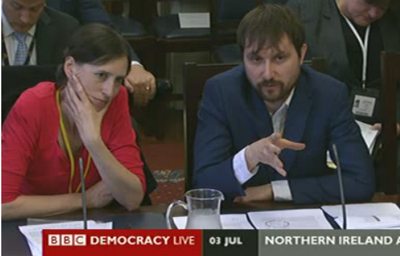
Mike Harris, head of advocacy with Index on Censorship wrote a article, 'Stormont must give us a libel law fit for modern age,' in the Belfast Telegraph and on the Index website, available here and here. Mike wrote:
"To protect free speech, US President Barack Obama signed into law the US Speech Act to protect US citizens from the effect of English, Welsh and Northern Irish libel law, an act described as a “national embarrassment” by MPs. 
Now Northern Ireland is alone with its embarrassing libel law. The law of England and Wales has been substantially reformed after the Libel Reform Campaign won support from 60,000 members of the public and over 100 charities and campaigning groups and in response the Government passed the Defamation Act.